How to Attract More Male Patients Into Your Aesthetics Clinic
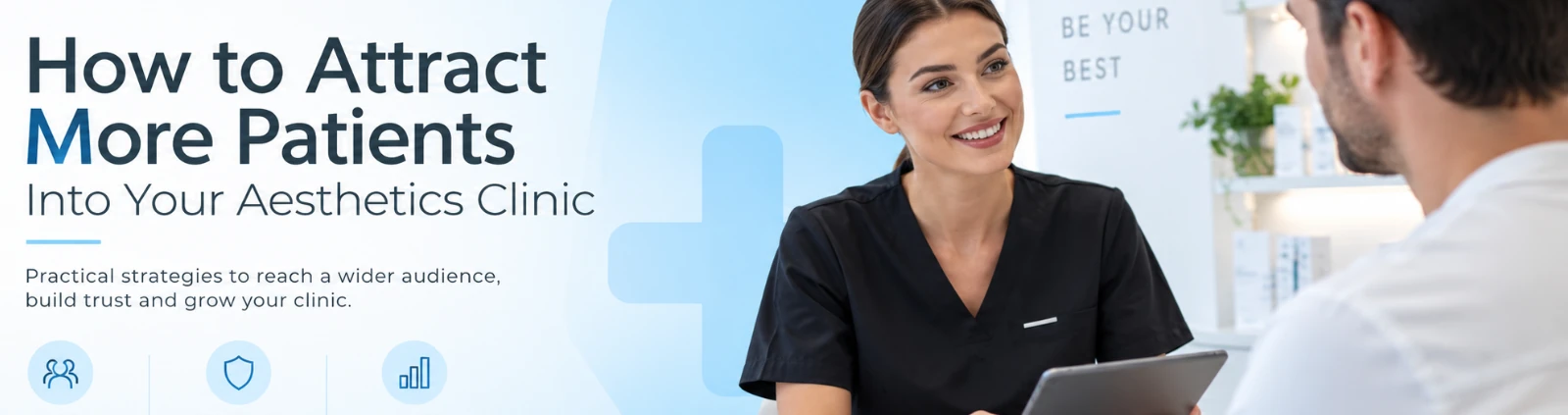
The aesthetics market is no longer focused predominantly on women. More men are becoming interested in treatments that can improve skin quality, soften signs of ageing, sharpen facial features or simply help them look fresher without dramatically changing their appearance.
For aesthetics clinics, that creates a valuable opportunity. However, attracting male patients usually requires more than adding a photograph of a man to your Instagram feed. The language you use, treatments you promote, consultation process, website content and even the atmosphere inside your clinic can all influence whether a potential male patient feels that your services are relevant to him.
In this article, we look at practical ways UK aesthetics clinics can attract more male patients while keeping marketing professional, responsible and compliant.
Why Should Aesthetics Clinics Market to Men?
Men can represent an important area of growth for an established aesthetics business, particularly if your existing patient base is heavily weighted towards women.
Many clinics already offer treatments that are equally relevant to male patients, including dermal fillers, skin boosters, microneedling, chemical peels and other skin rejuvenation treatments. The challenge is often not introducing new services, but presenting existing treatments in a way that appeals to a different audience.
There is also an important commercial benefit. Attracting a new patient demographic can help diversify clinic revenue rather than relying on the same group of patients or a small number of treatments.
From a business perspective, however, growth should be measured properly. More enquiries do not automatically mean a more profitable clinic. Keep an eye on your cost per lead, consultation-to-treatment conversion rate, average patient spend, treatment margins and repeat booking rate when assessing whether male-focused marketing is working.
Understand What Male Patients Actually Want
One of the biggest mistakes a clinic can make is assuming that men want exactly the same outcomes as existing female patients.
There will naturally be considerable variation between individuals, but some male patients may be particularly interested in subtle results. They might describe wanting to look “less tired”, “fresher” or “better for my age” rather than asking for a particular aesthetic treatment by name.
Others may have a specific concern, such as skin texture, acne scarring, facial volume loss or the appearance of the jaw and chin.
Your marketing should therefore start with the concern rather than always starting with the treatment.
Instead of relying entirely on content such as:
“Book our latest skin booster treatment.”
Consider content built around questions such as:
“Skin looking tired even when you aren’t? Here are some of the options we discuss with male patients looking to improve skin quality.”
This is more approachable for someone who knows what they would like to improve but does not yet understand the difference between a skin booster, dermal filler or another treatment.
Build a Male-Focused Section of Your Website
If every photograph, testimonial and treatment description on your website appears to be aimed at women, male visitors may quickly conclude that the clinic is not intended for them.
You do not necessarily need an entirely separate website or treatment menu. A dedicated page such as “Aesthetic Treatments for Men” can provide a useful entry point.
That page could introduce concerns and treatments including:
- improving the appearance of tired or ageing skin;
- skin hydration and skin quality treatments;
- dermal filler consultations;
- chin and jawline assessment;
- facial volume loss;
- fine lines and wrinkles;
- acne scarring and uneven skin texture;
- microneedling and other skin rejuvenation options; and
- professional skincare and ongoing skin maintenance.
Where appropriate, link these concerns through to detailed treatment pages explaining what happens during treatment, expected downtime, potential risks, suitability and aftercare.
This is useful for patients and can also help your organic search visibility for searches such as “aesthetic treatments for men”, “male skin treatments” and relevant treatment searches in your local area.
Use Male Patients in Your Clinic Content
Representation matters. If someone can see people like themselves using your clinic, the psychological barrier to making that first enquiry becomes smaller.
With the appropriate consent and permissions, consider including male patients in your website photography, social content, testimonials and treatment education.
Real clinic photography will usually be more convincing than filling your website with generic stock images.
Before-and-after photography can also be useful where appropriate, but it needs to represent genuine treatment outcomes and must not create unrealistic expectations.
The General Medical Council’s guidance on cosmetic interventions states that medical professionals must market services responsibly and must not mislead patients about the results they are likely to achieve. Clinics should also follow the relevant Advertising Standards Authority and Committee of Advertising Practice requirements when advertising treatments.
Talk About Results Without Reinforcing Stereotypes
There is nothing wrong with discussing traditionally masculine facial characteristics when they are relevant to an individual patient’s objectives. Problems arise when marketing implies that a man needs a particular jawline, face shape or appearance to be attractive or successful.
Keep the emphasis on individual assessment.
For example, content about dermal fillers could explain that fillers may be considered for areas such as the chin, jawline or cheeks depending on anatomy and the patient’s objectives. Avoid presenting one particular facial shape as something every male patient should aspire to.
This approach is more professional and gives your practitioners considerably more freedom during consultation to recommend what is actually appropriate for the individual.
Make the First Appointment Less Intimidating
Someone who has never visited an aesthetics clinic may have plenty of questions they do not particularly want to ask publicly.
What will happen during the consultation? Will treatment happen immediately? How noticeable will the result be? How much downtime is involved? Will colleagues be able to tell?
Answer these questions before the patient arrives.
Create a Clear “What to Expect” Page
Explain your consultation process from beginning to end. Tell prospective patients whether treatment suitability is assessed separately, approximately how long appointments take, what aftercare is provided and what follow-up arrangements are available.
For medical professionals covered by GMC standards, informed decision-making is particularly important. The GMC says patients must receive enough information and time to make a voluntary and informed decision. Practitioners should discuss expected outcomes, benefits and risks and consider the patient’s individual needs.
You can read the GMC guidance on decision making and consent for further information.
Promote the Concern, Not Just the Product
A patient new to aesthetics probably does not know which brand of dermal filler or skin booster they need. In many cases, they may not even know which treatment category is appropriate.
Your educational content should bridge that gap.
Useful Male-Focused Content Ideas
- “Why does my face look tired even when I’ve slept?”
- “What causes men’s skin to change as they get older?”
- “What are the options for improving jawline definition?”
- “Can aesthetic treatments look natural on men?”
- “What are skin boosters and are they suitable for men?”
- “How can men improve acne scarring and uneven skin texture?”
- “Dermal fillers for men: what happens during a consultation?”
- “How much downtime should I expect after an aesthetic treatment?”
These subjects work well for clinic blogs, FAQs, Instagram Reels, Facebook content, email campaigns and short educational videos.
They also demonstrate expertise without turning every piece of content into a direct sales pitch.
Use Google Search to Capture Existing Demand
Social media is useful for generating awareness, but Google can reach people who are already actively researching a treatment.
Consider creating high-quality pages around genuine searches relevant to your clinic, particularly combinations involving treatment, concern, gender and location.
Examples might include “male aesthetics clinic Birmingham”, “dermal fillers for men Manchester” or “men’s skin treatments London”, depending on where your clinic actually operates.
A strong local landing page should contain considerably more than a location name inserted into generic text. Include information about your practitioners, clinic, treatments, consultation process, directions, parking or transport, FAQs and genuine patient feedback where available.
Your Google Business Profile should also be kept accurate and updated with appropriate photographs, opening hours and clinic information.
Advertise to Men on Social Media Carefully
Paid social advertising allows clinics to test campaigns specifically intended to increase awareness among adult men.
Rather than immediately advertising a particular injectable treatment, you could test educational content around skin quality, ageing, facial aesthetics or first-time treatment consultations.
It is important, however, that aesthetics advertising complies with UK advertising rules.
CAP rules prohibit ads for cosmetic interventions from being targeted at under-18s. For non-broadcast media, including social media, online advertising, email, posters and leaflets, cosmetic intervention advertising must not be placed in media where under-18s make up 25% or more of the audience. Advertisers using social platforms should take reasonable steps to ensure their targeting excludes under-18s.
Clinics advertising injectable and other non-surgical treatments should review the ASA’s guidance on Botox and non-surgical cosmetic interventions.
Be Particularly Careful When Marketing Prescription-Only Medicines
Marketing anti-wrinkle services requires additional care because botulinum toxin products such as Botox are prescription-only medicines.
Prescription-only medicines cannot be advertised to the general public. Clinics should therefore avoid treating “Botox” as if it were simply another consumer product that can be freely promoted through paid advertising, social posts or promotional offers.
The ASA and CAP publish specific guidance on advertising Botox, which clinics offering these services should familiarise themselves with.
Marketing should also avoid language suggesting that cosmetic interventions are risk-free or that particular results are guaranteed.
Make Privacy and Discretion Part of the Patient Experience
Privacy can be important to any aesthetics patient, particularly someone attending a clinic for the first time.
Small operational details can make the experience more comfortable. Online booking, discreet appointment communications, professional reception areas and clear information about confidentiality can all help.
Think about the entire patient journey, including:
- how appointments appear in email and SMS reminders;
- whether patients can make an initial enquiry online;
- how private consultations feel;
- how photographs and patient records are handled;
- whether consent for marketing photographs is clearly separated from treatment consent; and
- how easily patients can contact the clinic with aftercare concerns.
Patient information and clinical photographs are personal data and must be handled appropriately. Clinics should review the Information Commissioner’s Office guidance on UK GDPR when developing their processes.
Do Not Turn Male Aesthetics Into a Gimmick
“Brotox” and similar terminology might occasionally generate engagement, but it is worth considering whether it matches the positioning of your clinic.
For many potential patients, straightforward language is likely to feel more credible.
A 42-year-old professional researching treatment for the first time may respond better to “natural-looking aesthetic treatments for men” than a campaign that tries too hard to make cosmetic treatments sound masculine.
There is no need to redesign the entire clinic around men. Make your existing brand inclusive enough that male patients can see themselves using it.
Use Consultations to Understand the Individual Patient
Good marketing gets someone through the door. A good consultation determines whether treatment should actually go ahead.
Practitioners should not assume that a male patient automatically wants a stronger jaw, larger chin or completely wrinkle-free forehead.
Ask why the patient is considering treatment and what they would like to achieve. Discuss their medical history, expectations, available options, risks, likely results, aftercare and alternatives as appropriate.
The GMC specifically states that medical professionals providing cosmetic interventions should ask why a patient wants the intervention and what outcome they hope to achieve. Where an intervention is unlikely to deliver the desired outcome or provide overall benefit, the practitioner should explain this and should not provide the treatment if they continue to believe it would not be beneficial.
This patient-first approach is important for safety, but it also builds the kind of trust that creates long-term patients.
Offer Treatment Plans Rather Than Chasing One-Off Appointments
Some new patients arrive expecting one treatment to solve every concern. A proper assessment may identify a more appropriate staged approach.
For example, somebody concerned about looking tired may not necessarily require dermal filler. Depending on their anatomy, skin condition and objectives, a practitioner might discuss skincare, skin boosters, microneedling or another suitable option.
The important point is that treatment recommendations should be clinically appropriate rather than driven by whichever service has the highest margin.
For clinics, successful long-term growth usually comes from patient retention rather than constantly discounting treatments to attract new bookings.
Encourage Reviews From Male Patients
Social proof can be especially useful when targeting a demographic that is currently underrepresented in your patient base.
If appropriate, encourage satisfied male patients to leave genuine feedback on Google or your chosen review platform. Do not tell patients what to write and avoid selectively manipulating testimonials to make unsupported treatment claims.
Even a relatively small number of authentic reviews from male patients can help demonstrate that your clinic regularly treats a broader range of people.
Track Whether Your Male Marketing Is Actually Working
Do not assume a campaign is successful because an Instagram Reel received plenty of views.
Track the commercial results.
Useful clinic KPIs can include:
- male enquiries per month;
- cost per enquiry from paid advertising;
- consultations booked;
- consultation attendance rate;
- consultation-to-treatment conversion rate;
- average treatment value;
- gross profit by treatment;
- repeat booking rate; and
- patient acquisition cost.
For example, spending £500 on a campaign that generates 40 enquiries might initially look successful. If only two become patients, you need to consider the acquisition cost and the gross profit generated by those patients before increasing the advertising budget.
Conversely, a campaign generating fewer enquiries may be much more valuable if those patients book consultations, proceed with suitable treatments and return to the clinic.
Remember That Regulation Differs Across the UK
Clinics should understand which regulatory requirements apply to their treatments, practitioners and location.
In England, the Care Quality Commission explains that it does not regulate every cosmetic treatment. For example, it does not regulate dermal filler injections or cosmetic injections of muscle-relaxing substances simply because they are used for cosmetic purposes. However, other regulated activities and circumstances, such as using botulinum toxin to treat a medical condition, may bring a provider within CQC requirements.
The regulatory position also differs between England, Scotland, Wales and Northern Ireland, so clinics operating across more than one UK nation should check the rules applying to each location.
Professional standards may also apply depending on who provides or prescribes the treatment. Doctors, for example, should follow the GMC’s cosmetic intervention standards, while other regulated healthcare professionals should follow the requirements of their own professional regulator.
A Practical Male Patient Marketing Plan for Your Clinic
If male patients currently represent only a small proportion of your bookings, there is no need to overhaul your marketing overnight. Start with a focused three-month test.
Month One: Build the Foundations
- Review your website and social channels from a male patient’s perspective.
- Create a dedicated men’s aesthetics or men’s skin treatment page.
- Add genuine male imagery where you have suitable consent.
- Review treatment descriptions for unnecessarily gendered language.
- Create FAQs answering common first-treatment concerns.
Month Two: Create Demand
- Publish two or three male-focused educational articles.
- Create short videos answering common questions.
- Feature appropriate male patient experiences where permission has been obtained.
- Test an adult-targeted social campaign that complies with CAP requirements.
- Optimise your local Google presence.
Month Three: Measure and Improve
- Compare enquiries with your previous baseline.
- Measure consultation bookings and conversion rates.
- Identify which treatments or concerns generated the strongest response.
- Calculate patient acquisition costs.
- Ask new patients how they discovered the clinic.
- Use the findings to determine where the next month’s marketing budget should go.
Frequently Asked Questions
What aesthetic treatments are popular with male patients?
There is no single treatment that is suitable for men generally. Depending on the patient’s concerns and clinical assessment, options may include dermal fillers, skin boosters, microneedling, professional skincare and other skin rejuvenation treatments. Treatment should always be recommended according to the individual’s needs, medical history and desired outcome.
Should my clinic have a separate men’s treatment menu?
Not necessarily. A dedicated men’s aesthetics webpage can be useful for marketing and SEO, but you do not need to artificially divide every treatment by gender. Focus on concerns, outcomes and individual suitability.
Can aesthetics clinics advertise treatments directly to men on social media?
Yes, subject to the rules applying to the particular treatment and advertisement. Cosmetic intervention advertising must not be targeted at under-18s, and prescription-only medicines cannot be advertised to the general public. Clinics should review current ASA and CAP guidance before launching campaigns.
Should we offer discounts to attract first-time male patients?
Price promotions should be approached carefully. Excessively aggressive discounts, countdowns and pressure-selling can be inappropriate in healthcare and aesthetics marketing. GMC guidance for medical professionals states that promotional tactics must not be used in ways that could encourage ill-considered decisions. Building trust through education, consultations and credible patient experiences is generally a stronger long-term strategy.
How can we make male patients feel more comfortable?
Provide clear information before the appointment, offer a straightforward consultation process and avoid assuming that the patient already understands aesthetics terminology. Discretion, professional communication and realistic discussions about results and downtime can also make a significant difference.
Useful UK Resources for Aesthetics Clinics
- Advertising Standards Authority and Committee of Advertising Practice for UK advertising rules and guidance.
- CAP guidance on Botox and non-surgical cosmetic intervention advertising.
- General Medical Council guidance on cosmetic interventions.
- Care Quality Commission information on cosmetic treatment regulation in England.
- Information Commissioner’s Office UK GDPR guidance.
Building a More Inclusive Aesthetics Clinic
Attracting more male patients does not require turning your clinic into a completely different business. In many cases, the treatments, expertise and infrastructure are already there. What needs to change is how effectively you communicate that those services are relevant to men too.
Start by understanding the concerns potential patients are actually searching for. Create useful educational content, show a more representative range of patients, make the first consultation easy to understand and remove unnecessary barriers from the booking process.
Most importantly, keep treatment recommendations individual and clinically appropriate. Good aesthetics marketing should start the conversation, not dictate the treatment.
For clinics that get that balance right, male aesthetics can become a valuable additional patient segment while helping to build a broader, more inclusive and commercially resilient practice.
This article is intended for qualified aesthetic practitioners only. Aesthetics Wise is a professional trade supplier and does not provide medical advice. Always refer to individual product guidelines and your professional training when performing aesthetic treatments.