
What is a Lip Flip?
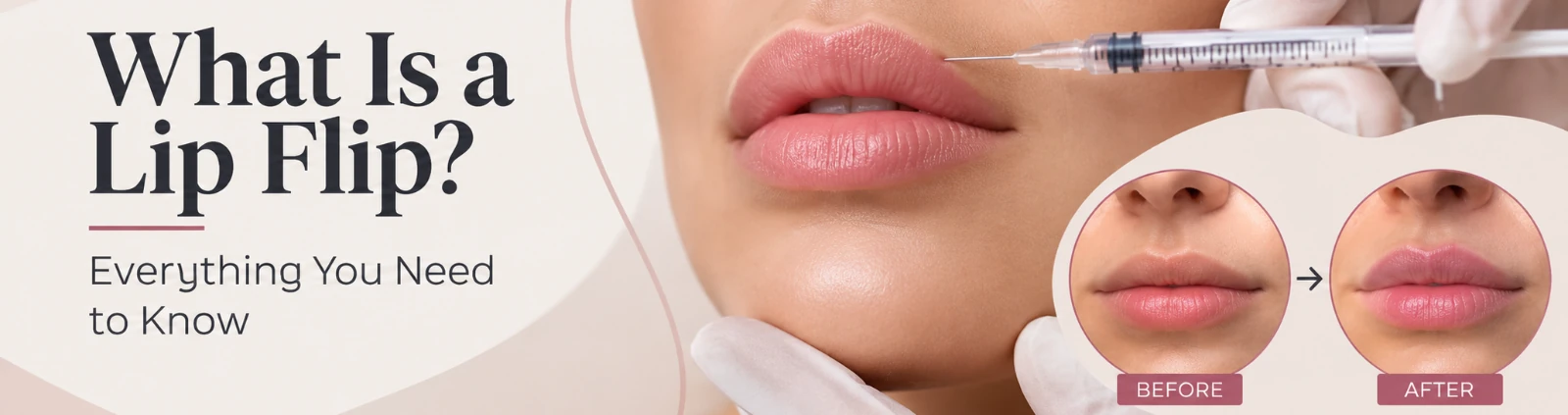
When it comes to lip enhancement, dermal fillers tend to get most of the attention. However, another option has become increasingly popular with clients who want a subtle change to their smile: the lip flip.
Unlike lip fillers, which add volume, a lip flip uses small amounts of botulinum toxin to relax specific fibres of the muscle around the upper lip. The aim is a slightly more visible upper lip, without adding any volume.
This post is aimed at UK aesthetics practitioners and clinic owners, and can also help you explain the treatment to clients. It covers how a lip flip works, how long it lasts, how it compares with lip filler, the risks, and the UK prescribing, advertising and insurance points to understand before offering it.
In short: a lip flip relaxes part of the orbicularis oris muscle so that more of the pink of the upper lip shows, particularly when smiling. It adds no volume, typically lasts around 6 to 12 weeks, and uses a prescription-only medicine, so it needs a face-to-face consultation with a qualified prescriber in England.
What Is a Lip Flip?
A lip flip is a non-surgical cosmetic procedure that uses botulinum toxin type A, commonly associated with brand names such as Botox, to temporarily relax part of the muscle surrounding the upper lip.
The treatment targets the orbicularis oris, the circular muscle responsible for movements such as pursing the lips, speaking and drinking. By relaxing selected fibres, the upper lip may roll slightly outwards, making more of the pink part of the lip visible.
This can create the appearance of a fuller upper lip without increasing its physical volume. It appeals to clients who want a subtle enhancement rather than the more noticeable change associated with some dermal filler treatments.
However, a lip flip doesn’t work for everyone. Results depend on individual lip anatomy, muscle activity and the client’s expectations.
How Does a Lip Flip Work?
A lip flip works by temporarily reducing activity in selected fibres of the muscle around the upper lip. When those areas are relaxed, the upper lip may be less inclined to curl inwards, which can make it look slightly more prominent, particularly when smiling.
Unlike hyaluronic acid dermal fillers, the treatment doesn’t involve placing a volumising substance into the lips.
What Happens During a Lip Flip Appointment?
Individual protocols vary, but a typical appointment involves several stages:
- Initial consultation: The prescriber assesses the client’s lip anatomy, medical history, goals and suitability, face to face.
- Clinical assessment: The practitioner examines how the upper lip behaves at rest, when smiling and when speaking.
- Informed consent: Expected benefits, limitations, possible complications, off-label use and alternatives are explained.
- Treatment: An appropriately qualified practitioner administers small injections into selected areas around the upper lip, following an individualised plan.
- Aftercare: The client receives clear instructions on what to expect, possible side effects and when to seek medical advice.
The injections themselves are usually brief, but the appointment should allow enough time for consultation, assessment and documentation. Because the treatment affects a muscle involved in everyday activities, precision and appropriate training are essential.
What Are the Benefits of a Lip Flip?
For suitable clients, a lip flip can offer several potential benefits:
- Subtle enhancement: It aims to show more of the existing upper lip rather than change its volume, which suits clients who prefer an understated look.
- Upper lip visibility when smiling: Some clients feel their upper lip disappears when they smile. In suitable cases a lip flip may help it stay more visible, although it cannot address every cause of a thin-looking upper lip.
- No added volume: There is no hyaluronic acid gel in the lips, although the treatment still involves injections and carries its own risks.
- Short treatment time: Once consultation and assessment are complete, the procedure is usually quick, and many clients return to normal activities soon afterwards, subject to aftercare advice.
- Temporary results: Because the effect wears off, some clients see this as a lower-commitment way to try a cosmetic treatment. Temporary does not mean instantly reversible, though: there is no equivalent of hyaluronidase for botulinum toxin.
Lip Flip vs Lip Filler: What’s the Difference?
Both treatments can change how the lips look, but they work in very different ways.
| Feature | Lip Flip | Lip Filler |
|---|---|---|
| Treatment type | Botulinum toxin injections | Usually hyaluronic acid dermal filler |
| Primary purpose | Changes upper lip muscle activity | Adds volume and can alter lip shape |
| Volume added | None | Yes |
| Onset of results | Usually 3 to 5 days, with full effect around 10 to 14 days | Volume is visible immediately, although swelling affects the early appearance |
| Typical duration | Around 6 to 12 weeks | Often 6 to 12 months, depending on product and individual factors |
| Main limitations | Subtle effect and possible temporary changes to lip function | Swelling, lumps, migration and rare but serious vascular complications |
| Regulatory position | Botulinum toxin is a prescription-only medicine | Hyaluronic acid fillers are generally regulated as medical devices |
The key distinction is that a lip flip changes muscle activity, while lip fillers add physical volume.
For a client with naturally thin lips who wants a noticeable increase in size, a lip flip alone is unlikely to deliver it. For a client with reasonable upper lip volume that becomes less visible when smiling, a lip flip may be worth discussing with a qualified prescriber.
Some plans combine both approaches, but combination treatments need careful assessment because the effects and risks are different. Practitioners who offer hyaluronic acid lip filler can browse our dermal filler range, including Revolax, Purilax, Lumifil and Restylane. Product selection and suitability for the lips should always follow the manufacturer’s instructions for use. For background, see our guide to dermal fillers for aesthetic practitioners and our article on how long dermal fillers actually last.
Can You Combine a Lip Flip With Dermal Fillers?
In some circumstances a clinician may consider combining a lip flip with hyaluronic acid filler, for example where a client wants more upper lip visibility when smiling alongside added volume or definition. These concerns involve different features and may need different approaches.
Combining procedures isn’t automatically better. Each one adds considerations, and the overall plan should reflect the client’s anatomy, medical history, desired outcome and tolerance for risk.
Dermal fillers also carry their own potential complications, including vascular occlusion and, rarely, tissue damage or visual impairment. Practitioners should be trained to recognise and manage these complications, including current guidance on complication management, before offering filler.
How Long Does a Lip Flip Last, and When Does It Work?
A lip flip typically lasts around 6 to 12 weeks, although this varies between individuals. Factors that can influence duration include:
- Individual muscle activity and anatomy.
- The botulinum toxin product used.
- The prescribed treatment plan.
- Individual response to the medicine.
- Previous treatment history.
Unlike dermal fillers, which physically occupy space in the tissue, botulinum toxin works by temporarily blocking nerve signals to the treated muscle. As normal activity returns, the upper lip generally returns towards its original appearance. Repeat treatment should follow a reassessment rather than a fixed schedule.
Results aren’t immediate. Some clients notice changes within three to five days, but the full effect may take around 10 to 14 days. Explain this timeline at consultation so clients don’t expect an instant result, and consider a follow-up assessment once the treatment has had time to take effect.
Who Is a Good Candidate for a Lip Flip?
A lip flip may suit adults who want a subtle improvement in upper lip visibility and understand the limitations. Potential candidates include clients who:
- Feel their upper lip curls inwards when they smile.
- Want a subtle change without added volume.
- Prefer a temporary cosmetic option.
- Have realistic expectations.
- Have been assessed as clinically suitable by an appropriately qualified prescriber.
A lip flip isn’t necessarily appropriate for clients with significant lip asymmetry, certain neuromuscular conditions, existing difficulty controlling their lips, or other relevant contraindications. Pregnancy and breastfeeding also call for particular caution because of limited safety data and product-specific prescribing advice.
Suitability should always be decided through an individual medical assessment rather than appearance alone. Clients who play wind instruments, sing or speak professionally deserve extra discussion, as even temporary changes in lip control may matter to them.
What Are the Risks and Side Effects of a Lip Flip?
Lip flips are often described as minimally invasive, but they are still treatments using a prescription-only medicine. The area around the mouth is particularly sensitive because its muscles are involved in speaking, eating, drinking and expression.
Common and Temporary Side Effects
- Mild swelling or redness around injection sites.
- Bruising or tenderness.
- Temporary discomfort.
- Headache.
- Unwanted changes in upper lip movement.
Functional Side Effects
Because botulinum toxin reduces muscle activity, excessive or unintended relaxation can affect everyday functions. Some clients may temporarily experience:
- Difficulty drinking through a straw.
- Problems pursing their lips.
- Changes in speech or pronunciation.
- Difficulty controlling liquids while drinking.
- An uneven smile or lip asymmetry.
These effects generally improve as the medicine wears off, but they can be inconvenient and occasionally distressing.
Rare but serious complications include allergic reactions and effects beyond the intended treatment area. New difficulty swallowing, speaking or breathing needs urgent medical assessment. For practitioners, this reinforces the importance of training, conservative clinical decisions, informed consent and access to medical support.
Lip Flip Aftercare
Aftercare should come from the treating practitioner and be tailored to the individual client. General advice may include:
- Avoiding unnecessary rubbing or pressure around the treated area straight afterwards.
- Following the practitioner’s advice on exercise and other activities.
- Allowing enough time for the treatment to take effect before judging the result.
- Watching for unexpected changes in lip movement or facial symmetry.
- Contacting the clinic if unusual or persistent symptoms develop.
There is limited evidence that commonly repeated rules, such as staying upright for a fixed number of hours, reliably prevent botulinum toxin complications, so advice should be clinically justified rather than based on habit. Clients should have clear contact details and know when to seek urgent help. Our guide on exercising after dermal fillers or skin boosters covers aftercare for those treatments, and our dermal filler aftercare guide covers the first 48 hours.
What Is the Difference Between a Lip Flip and a Gummy Smile Treatment?
Both may involve botulinum toxin around the mouth, but they are different procedures.
A lip flip primarily aims to change how the upper lip sits by affecting the orbicularis oris. A gummy smile treatment targets muscles that lift the upper lip, with the aim of helping improve the appearance of a smile that shows a lot of gum.
There can be some overlap in cosmetic goals, but the muscles involved and the clinical plans differ. Practitioners should assess the underlying cause of a client’s concern rather than treating the two as interchangeable.
Are Lip Flips Legal in the UK? Prescribing, Age and Advertising Rules
Yes, lip flips can be performed legally in the UK, but there are important rules covering the medicine used, who can prescribe it, how it can be advertised and who can be treated.
Botulinum toxin type A products are prescription-only medicines (POMs). They must be prescribed by an appropriately qualified prescriber following a suitable assessment. A lip flip is generally an off-label cosmetic use, meaning it may fall outside the indications covered by the product’s UK marketing authorisation. Off-label prescribing can be lawful when clinically justified, but the prescriber takes responsibility for the decision and must make sure the client understands the implications.
Prescribing and Administration
Prescribing and administering are not the same thing. Not everyone trained to inject is legally authorised to prescribe POMs, and prescribing must be carried out by a suitably qualified professional acting within their legal authority and competence.
Remote prescribing is not permitted for cosmetic injectables in England. Since 1 June 2025, independent nurse and midwife prescribers must carry out a face-to-face consultation before prescribing POMs for non-surgical cosmetic procedures, bringing them in line with the expectations already set by the GMC, GDC and GPhC. Read more in the Save Face article on the ban on remote prescribing.
The General Medical Council’s cosmetic interventions guidance sets out professional responsibilities on consultation, consent, client safety and prescribing for doctors, and now also applies to physician associates and anaesthesia associates. Other regulated professionals must follow their own regulator’s standards.
Clinic owners also need suitable arrangements for medicine sourcing, storage, administration, record keeping and managing complications.
Is Aesthetics Licensing Coming in England?
The Health and Care Act 2022 gave the Government the power to introduce a licensing scheme for non-surgical cosmetic procedures in England, and a consultation response was published in August 2025. To our knowledge, the regulations that would bring the scheme into force have not yet been made and no start date has been confirmed, so existing medicines law, professional standards and the under-18 rules remain the framework to follow. Scotland has moved ahead with its own licensing legislation in 2026, so practitioners outside England should check the rules that apply where they work.
Can Under-18s Have a Lip Flip?
In England, the Botulinum Toxin and Cosmetic Fillers (Children) Act 2021 makes it an offence to administer botulinum toxin or cosmetic fillers to anyone under 18 for cosmetic purposes, subject to limited medical exceptions. It also places responsibilities on those who make arrangements for such treatments. Practitioners elsewhere in the UK should check the national legislation that applies to them.
Can You Advertise Lip Flip Treatments?
This is particularly important for aesthetics businesses. Under rule 12.12 of the CAP Code, prescription-only medicines and treatments cannot be advertised to the public. The ASA has also made clear that indirect references have the same effect as naming the product, so using wording such as “lip flip” doesn’t automatically make a public advert compliant if it effectively promotes a POM.
The ASA’s guidance on botulinum toxin products explains what can and cannot be said, including that clinics can promote the consultation rather than the product, and that advertising directly to healthcare professionals in media aimed only at them is permitted. Take particular care with paid social campaigns, promotional offers, treatment menus and online booking pages, and keep educational content factual and balanced rather than encouraging clients to buy a POM.
What Should UK Aesthetics Practitioners Consider Before Offering Lip Flips?
Introducing a new treatment involves more than adding a line to the price list. There are clinical, regulatory and business points to address.
Training and Competence
Practitioners should have suitable training in facial anatomy, botulinum toxin pharmacology, client assessment, injection technique, complication recognition and emergency procedures. A short course doesn’t automatically make someone legally or professionally competent to perform every injectable treatment, and training should match the practitioner’s existing qualifications, scope of practice and regulatory obligations.
Consultation and Consent
A proper consultation should establish what the client wants and whether a lip flip is likely to meet those expectations. Explain that the treatment doesn’t add volume and may affect lip movement. Consent should be informed, documented and free from pressure, and where treatment involves off-label prescribing, that should be part of the discussion.
Insurance and Clinic Policies
Before offering lip flips, confirm that your professional indemnity insurance specifically covers the treatment, including any off-label use. Clinics should also have suitable policies covering:
- Client consultation and medical screening.
- Prescribing and medicine administration.
- Consent and treatment records.
- Infection prevention and control.
- Adverse reactions and emergency escalation.
- Complaints and follow-up care.
- Medicine storage, traceability and stock management.
Check local authority licensing requirements and any requirements from your healthcare regulator as well. The Joint Council for Cosmetic Practitioners (JCCP) and Save Face both publish practitioner standards and registers.
Stock Management and Treatment Costs
Clinics need to consider the full cost of delivering a treatment, not just the medicine. Consultation time, prescriber involvement, consumables, insurance, clinical waste disposal and follow-up appointments all contribute. Accurate stock records and batch traceability matter for every injectable product you handle.
Make sure your accounting and VAT treatment reflects the services you provide. Cosmetic treatments aren’t automatically VAT-exempt just because a healthcare professional administers them. HMRC explains more in VAT Notice 701/57: Health professionals and pharmaceutical products. If you are weighing up how to buy for your clinic, our guide on whether bulk buying increases profit may help.
Where Do Skin Boosters and Polynucleotides Fit In?
Skin boosters and polynucleotides are sometimes discussed alongside lip enhancement, but they serve a different purpose. Hyaluronic acid skin boosters are generally used to support the look of skin hydration and quality, and polynucleotide products are marketed for skin-quality applications, with evidence varying between products and uses.
Some skin boosters are marketed for use around the lips, for example Lumi-Pro Lips. Whether a product suits a particular client and area depends on the manufacturer’s instructions for use and the practitioner’s assessment.
For a closer comparison, read skin boosters vs polynucleotides. Neither option is a substitute for a lip flip. A lip flip affects muscle movement, whereas skin boosters and polynucleotides are aimed at skin quality. Avoid presenting them as interchangeable or making claims beyond the available evidence and product information.
Frequently Asked Questions About Lip Flips
Does a Lip Flip Hurt?
Most clients feel brief discomfort from the injections. It varies between people, and some have mild tenderness or bruising afterwards.
Does a Lip Flip Make Your Lips Bigger?
No. A lip flip doesn’t add physical volume. It may make more of the existing upper lip visible by temporarily relaxing selected muscle fibres.
Can a Lip Flip Look Natural?
A subtle result is possible in suitable clients, but outcomes depend on anatomy, treatment planning and muscle response, and natural-looking results cannot be guaranteed.
Can a Lip Flip Go Wrong?
Yes. Unwanted effects can include lip asymmetry, difficulty pursing the lips, changes in speech and problems drinking. Most muscle-related effects improve as the treatment wears off, but serious symptoms need prompt medical attention.
Is a Lip Flip Better Than Lip Filler?
Neither is universally better. A lip flip may suit a client seeking subtle upper lip visibility, while dermal filler may suit one wanting added volume or definition. The decision should follow an individual clinical assessment.
How Often Can You Have a Lip Flip?
Results often last around 6 to 12 weeks, but repeat treatment should only follow reassessment by an appropriate clinician, taking account of the specific medicine, prescribing guidance and the client’s circumstances.
Is a Lip Flip Reversible?
There is no routine reversal for the muscle-relaxing effect of botulinum toxin. If an unwanted cosmetic or functional effect occurs, it generally improves as the medicine wears off.
Can a Lip Flip Be Prescribed Remotely?
No. Remote prescribing of cosmetic injectables is not permitted in England. A face-to-face consultation with the prescriber is required before a POM is prescribed for a non-surgical cosmetic procedure.
Can Anyone Trained in Aesthetics Perform a Lip Flip?
No. Training alone doesn’t provide prescribing rights or guarantee that a practitioner meets the legal, professional and insurance requirements. Botulinum toxin is a prescription-only medicine, and practitioners must work within their lawful scope of practice.
Final Thoughts: Is a Lip Flip Worth Offering?
A lip flip can suit clients who want a subtle change to the look of their upper lip without added volume. By temporarily relaxing selected muscles around the mouth, it may help more of the upper lip stay visible, particularly when smiling. It isn’t right for everyone, and results are generally less dramatic than those from volumising lip filler.
For UK aesthetics practitioners, the priorities are understanding the treatment’s limits, assessing clients properly and keeping high standards of prescribing, consent and clinical safety. With any injectable treatment, realistic expectations and client wellbeing should come before the promise of a particular result.
Supporting Your Clinic With Aesthetics Wise
At Aesthetics Wise, we are a UK trade supplier for verified practitioners and clinics. Our range includes dermal fillers, skin boosters and clinic consumables, with batch traceability on every order and free delivery on qualifying orders. Learn more about Aesthetics Wise, see our wholesale aesthetics supplies, or browse more practitioner guides in our Hot Topics hub.
Whether you are reviewing your treatment menu or tightening up your purchasing and stock records, working with reputable suppliers and choosing products that fit your scope of practice helps you deliver consistent, well-documented services.
Verified practitioners can create a trade account to view our full range and pricing, or contact the team with any questions.
Further Reading and Official UK Guidance
- General Medical Council: Cosmetic interventions guidance
- Advertising Standards Authority: Botulinum toxin products advertising guidance
- Save Face: Ban on remote prescribing in aesthetics
- Joint Council for Cosmetic Practitioners (JCCP)
- UK Legislation: Botulinum Toxin and Cosmetic Fillers (Children) Act 2021
- Medicines and Healthcare products Regulatory Agency (MHRA)
- MHRA Yellow Card Scheme: Report suspected medicine and medical device safety issues
- NHS: Cosmetic procedures
- HMRC: VAT Notice 701/57
Last reviewed: October 2026. Disclaimer: This article provides general educational information for UK aesthetics professionals. It does not constitute medical advice, prescribing guidance or practical injection training, and it does not promote any prescription-only medicine. Botulinum toxin treatments should only be considered following an appropriate clinical assessment and must comply with applicable UK law, professional standards and product-specific requirements.