
Treatment Guide to Chemical Peels
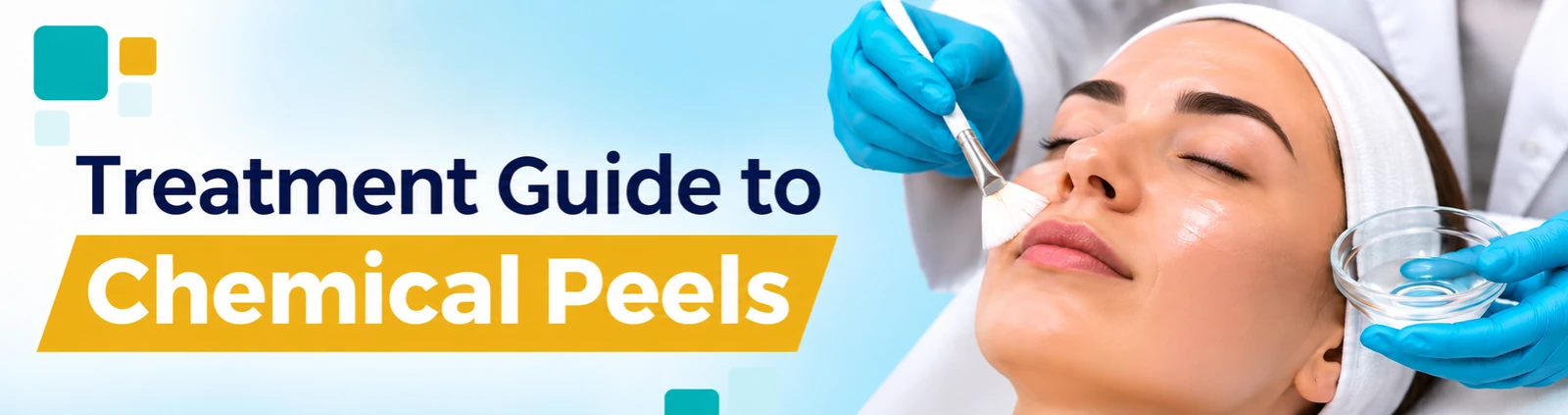
Chemical peels have become an increasingly popular treatment in UK aesthetics clinics, offering a versatile way to improve skin texture, address the appearance of pigmentation, soften the look of fine lines and support a clearer, more even complexion.
From gentle superficial peels that fit comfortably into a regular skincare routine to more intensive treatments aimed at visible signs of ageing and sun damage, chemical peels can be a valuable addition to a professional treatment menu.
However, not all chemical peels are the same. Understanding the different formulations, how they work, which clients may benefit and the precautions involved is essential for delivering safe, effective treatments. In England, the rules around the deepest peels are also about to change, so it pays to know where the law currently stands.
Lets explore everything UK aesthetics practitioners need to know about chemical peels, including the different types available, their benefits, treatment suitability, recovery expectations and important UK regulatory considerations as they stand in November 2026.
What Is a Chemical Peel?
A chemical peel is a skin resurfacing treatment that uses a carefully selected chemical solution to exfoliate the skin and encourage the shedding of damaged or ageing surface cells.
Depending on the formulation, concentration, pH and application technique, chemical peels can work at different depths within the skin.
The aim is to improve the appearance and texture of the skin by encouraging controlled exfoliation and subsequent skin renewal.
Chemical peels are commonly used to address concerns including:
- Fine lines and superficial wrinkles
- Uneven skin tone and texture
- Hyperpigmentation and sun damage
- Congested, breakout-prone skin and certain types of acne scarring
- Dull or congested skin
- Enlarged-looking pores
- Rough or uneven skin surfaces
Results vary depending on the type of peel, the client’s skin condition and the depth of treatment. While superficial peels can provide gradual improvements with relatively little downtime, deeper peels require more extensive recovery and carry greater risks.
Browse our professional chemical peels range for verified UK practitioners and clinics.
How Do Chemical Peels Work?
Chemical peels work by applying an exfoliating chemical agent to the skin, producing a controlled degree of injury to the outer layers and, with stronger treatments, potentially reaching deeper skin structures.
This process encourages the removal of damaged skin cells and stimulates the skin’s natural repair mechanisms.
For example, superficial peels primarily target the epidermis, the outermost layer of the skin. Medium-depth peels extend further into the skin, while deep peels can reach the deeper dermis.
The depth of a chemical peel depends on several factors, including:
- The active ingredient used
- The concentration and pH of the solution
- The formulation and delivery system
- The number of layers applied
- The length of contact with the skin
- The client’s skin type, condition and preparation
Importantly, a higher acid concentration does not automatically mean a better treatment. The overall formulation, application technique and suitability for the individual client are equally important.
The Three Main Types of Chemical Peels
Chemical peels are generally categorised according to how deeply they penetrate the skin.
1. Superficial Chemical Peels
Superficial peels, sometimes called light peels, work primarily on the epidermis and are generally the least invasive option.
They are commonly used to improve the appearance of mild pigmentation, uneven texture, dullness and certain congestion-related concerns.
Ingredients frequently associated with superficial peels include glycolic acid, lactic acid, mandelic acid and salicylic acid.
Typical recovery: Mild redness, dryness or flaking may occur for several days. Some clients experience very little visible peeling.
Best suited to: Clients seeking gradual improvements in skin appearance with relatively limited downtime.
Superficial peels are often performed as a course of treatments, with intervals determined by the formulation, the manufacturer’s instructions and the client’s skin response.
2. Medium-Depth Chemical Peels
Medium-depth chemical peels penetrate beyond the epidermis into the upper dermis.
These treatments may be considered for more noticeable pigmentation, certain superficial acne scars, sun damage and fine lines.
Trichloroacetic acid (TCA) is one of the agents commonly associated with medium-depth peeling, although the depth achieved depends on the formulation and application.
Typical recovery: Around one to two weeks of visible healing may be required, although redness and other changes can persist for longer.
Best suited to: Carefully selected clients with skin concerns that may not respond sufficiently to superficial treatments.
Medium-depth peels involve greater risks, including infection, scarring and changes in pigmentation. They require appropriate clinical expertise, careful client selection and suitable aftercare arrangements.
Because the government’s proposed definition of a restricted deep peel is anatomical (see the regulation section below), practitioners offering any peel that may reach the dermis should check how the final rules are worded rather than relying on a product’s “medium” label.
3. Deep Chemical Peels
Deep chemical peels reach further into the dermis and are designed to produce more significant resurfacing effects.
Phenol-based formulations are among the treatments historically associated with deep peeling.
These procedures can produce substantial improvements in selected cases of advanced photodamage and deeper wrinkles, but they also carry considerably greater risks.
Typical recovery: Initial healing may take several weeks, with redness and changes in skin appearance potentially continuing for months.
Best suited to: Highly selected clients undergoing treatment by appropriately qualified medical professionals in a suitable clinical setting.
Deep phenol peels can have systemic effects, including potential cardiac, liver and kidney complications. They should not be treated as routine beauty or salon procedures, and in England they are now the subject of proposed statutory restrictions.
Biphasic and Biostimulating Peels
Alongside traditional acid peels, many clinics now look at biphasic, biostimulating peel systems. These are generally positioned as lower-downtime options that combine a peeling phase with skin-supporting components, and they are often built into a course of sessions rather than used as a single, aggressive treatment.
As with any peel, depth, downtime and suitability depend on the specific product, the protocol and the individual client. Always follow the manufacturer’s instructions and confirm a product’s intended purpose and regulatory status before adding it to your menu.
Our chemical peels category includes the BioRePeelCl3 range for professional use, such as BioRePeelCl3 FND and BioRePeelCl3 Body, available to verified practitioners and clinics.
Which Chemical Peel Ingredients Are Commonly Used?
Understanding the active ingredients found in professional chemical peels helps practitioners make informed decisions about treatment selection.
Glycolic Acid
Glycolic acid is an alpha hydroxy acid (AHA) derived commercially from sources including sugar cane or produced synthetically.
It is commonly used to improve the appearance of dullness, uneven texture, mild pigmentation and fine lines.
Its relatively small molecular size contributes to its ability to penetrate the skin, although the finished formulation and application conditions determine the actual treatment effect.
Lactic Acid
Lactic acid is another AHA frequently used in superficial chemical peels.
It is often selected for treatments focused on surface exfoliation, improving skin texture and addressing the appearance of mild uneven pigmentation.
Lactic acid also has humectant properties, although this does not eliminate the possibility of irritation or barrier disruption.
Salicylic Acid
Salicylic acid is a beta hydroxy acid (BHA) commonly used in treatments for oily and breakout-prone skin.
Its oil-soluble properties make it useful in formulations designed to address the appearance of congestion and clogged pores.
Practitioners should assess allergies (including any known sensitivity to salicylates or aspirin), medical history and any relevant contraindications before treatment.
Mandelic Acid
Mandelic acid is an AHA commonly included in formulations targeting uneven tone, congestion and superficial skin texture concerns.
It is sometimes marketed as a gentler alternative to other AHAs, but suitability depends on the complete formulation, concentration and individual skin response.
Trichloroacetic Acid (TCA)
TCA is used in chemical peeling formulations that can produce superficial or medium-depth effects, depending on how the product is formulated and applied.
It may be used for selected pigmentation concerns, photodamage and textural irregularities.
Because TCA can cause significant chemical injury, it requires specialist training, careful assessment and strict adherence to appropriate clinical protocols.
What Are the Benefits of Chemical Peels?
When appropriately selected and performed, chemical peels can offer several benefits for clients looking to improve their skin’s appearance.
Improved Skin Texture
By removing damaged surface cells, superficial chemical peels can help skin appear smoother and more refined.
Brighter, More Even-Looking Skin
Some peels can help improve the appearance of uneven pigmentation and dullness, creating a more consistent-looking complexion.
Support for Breakout-Prone Skin
Selected formulations, particularly those containing salicylic acid, may help improve the appearance of congestion and certain breakouts.
However, chemical peels are not suitable for every acne presentation, and clients with severe or scarring acne may require assessment by a dermatologist.
Softer-Looking Fine Lines
Repeated superficial peels or appropriately selected deeper treatments may improve the appearance of certain fine lines and superficial signs of photoageing.
Complementary Skin Treatment Options
Chemical peels can form part of a broader professional skincare programme alongside treatments such as microneedling, skin boosters and dermal fillers. If you are weighing up injectable skin quality options, our guide to skin boosters vs polynucleotides explains how they differ.
However, combining or closely scheduling procedures can increase irritation, inflammation and other complications. Treatment intervals should be based on individual assessment, product instructions and established clinical protocols rather than a standard package schedule.
Who Is Suitable for a Chemical Peel?
One of the most important responsibilities for an aesthetics practitioner is determining whether a chemical peel is appropriate for the individual client.
A thorough consultation should assess the client’s skin concerns, expectations, medical history and potential risk factors.
Clients who may benefit from appropriately selected peels include those experiencing:
- Mild to moderate uneven skin texture
- Superficial pigmentation concerns
- Some forms of congestion and breakouts
- Early signs of photoageing
- Dull or rough-looking skin
However, suitability should never be determined by the client’s skin concern alone.
When Should Chemical Peels Be Avoided or Postponed?
Depending on the type of peel, treatment may be unsuitable or require additional medical assessment where a client has:
- Active skin infections, including cold sores in the treatment area
- Broken, inflamed or significantly irritated skin
- Recent sunburn or substantial UV exposure
- Active eczema, dermatitis or other inflammatory conditions affecting the treatment area
- A history of abnormal scarring or keloid formation
- Recent use of isotretinoin or other medicines that may affect skin healing
- Recent laser resurfacing, microneedling or other potentially irritating treatments
- Known allergies or sensitivities to formulation ingredients
- Pregnancy or breastfeeding where product safety information is insufficient
Some of these factors are relative rather than absolute contraindications. For example, the significance of previous isotretinoin treatment depends on the peel depth, treatment history and current clinical guidance.
Practitioners should follow the specific product’s contraindications and seek medical advice where necessary.
Chemical Peels and Different Skin Tones
Skin tone is an important consideration when selecting chemical peel treatments.
Clients with darker skin tones may have an increased risk of post-inflammatory hyperpigmentation following skin injury or inflammation.
This does not mean chemical peels are automatically unsuitable for darker skin. It means treatment selection, preparation, application and aftercare require particular care.
Practitioners should consider the client’s Fitzpatrick skin phototype alongside their individual history of pigmentation, previous treatments and skin sensitivity.
For clients prone to hyperpigmentation, a conservative approach and specialist expertise may help reduce avoidable complications.
It is also important to explain that chemical peels can sometimes worsen pigmentation rather than improve it, particularly when unsuitable products are used or the skin is exposed to UV radiation during recovery.
What Happens During a Professional Chemical Peel Treatment?
Although protocols vary between products, a professional chemical peel appointment generally follows several stages.
Step 1: Consultation and Skin Assessment
The practitioner assesses the client’s skin, discusses their concerns, reviews relevant medical information and determines whether treatment is appropriate.
Expected results, possible complications, recovery requirements and alternative treatments should be discussed before consent is obtained.
Step 2: Skin Preparation
The skin is prepared according to the manufacturer’s treatment protocol.
This may include cleansing and removing surface oils or products that could interfere with even application.
Some treatments require a preparatory skincare programme before the appointment, particularly where pigmentation risk is a concern.
Step 3: Chemical Peel Application
The chemical solution is applied by an appropriately trained practitioner using the product-specific technique.
Application time, number of layers and treatment endpoints must follow the relevant protocol.
Clients may experience tingling, warmth or a stinging sensation. Significant or unexpected pain should never be dismissed as a normal sign that the treatment is working.
Step 4: Neutralisation or Removal
Some chemical peels require neutralisation or removal after a specified period, while others are formulated to be self-neutralising or follow different treatment procedures.
Practitioners must follow the manufacturer’s instructions rather than applying the same neutralisation method to every peel.
Step 5: Aftercare and Recovery Advice
Following treatment, clients should receive clear instructions covering skincare, sun protection, expected recovery and warning signs that require professional attention.
Written aftercare information is particularly useful because clients may not remember every instruction discussed during their appointment.
Chemical Peel Aftercare: What Should Clients Do?
Aftercare plays an important role in supporting recovery and reducing the likelihood of avoidable complications.
Practitioners should provide instructions tailored to the peel used and the client’s individual circumstances.
1. Protect the Skin from UV Exposure
Recently treated skin may be more vulnerable to UV-related damage and pigmentation changes.
Clients should avoid unnecessary direct sun exposure and follow advice on appropriate broad-spectrum sun protection, commonly SPF 30 or higher, once suitable for the healing stage.
The NHS guidance on sunscreen and sun safety provides useful general advice.
2. Avoid Picking or Peeling Flaking Skin
Visible flaking can occur during recovery, but clients should never pull or pick at peeling skin.
Doing so may increase the risk of irritation, infection, scarring and pigmentation changes.
3. Use Gentle Skincare Products
Clients should avoid introducing harsh exfoliants or potentially irritating active ingredients until the skin has sufficiently recovered.
Products containing retinoids, exfoliating acids or other strong actives may need to be temporarily discontinued according to the treatment protocol.
Makeup is another consideration. Our article on the dangers of wearing makeup after treatment is a useful resource to share with clients, though peel-specific advice from the manufacturer always takes priority.
4. Avoid Excessive Heat and Friction
Depending on the treatment, clients may be advised to temporarily avoid saunas, steam rooms, intense exercise and activities that cause excessive sweating or irritation. Our guide on exercising after dermal fillers or skin boosters covers similar principles for injectable clients.
5. Follow the Recommended Treatment Schedule
Clients should not book additional chemical peels or other resurfacing treatments before their skin has recovered sufficiently.
The appropriate interval depends on the treatment depth, product formulation and individual healing response.
For clients who also receive injectables, our dermal filler aftercare guide is a helpful reference when planning treatment order and timing.
How Long Does It Take to Recover from a Chemical Peel?
Recovery times vary considerably depending on treatment depth and the individual client’s skin.
| Peel Type | Typical Initial Recovery | Common Effects |
|---|---|---|
| Superficial | Several days to approximately one week | Mild redness, dryness and flaking |
| Medium-depth | Approximately 7 to 14 days | Redness, swelling, crusting and peeling |
| Deep | Several weeks for initial healing | Significant redness, swelling, crusting and prolonged skin sensitivity |
These are general estimates rather than guaranteed recovery periods. Redness, pigment changes and sensitivity may persist beyond the initial healing stage, especially after deeper treatments.
Clients should be advised to seek prompt medical assessment if they develop increasing pain, spreading redness, pus, fever, unexpected blistering or other signs of a possible complication.
Are Chemical Peels Safe?
Chemical peels can be performed safely in appropriately selected clients when suitable products, competent practitioners and established treatment protocols are used.
However, they are not risk-free.
Potential complications include:
- Persistent redness and irritation
- Post-inflammatory hyperpigmentation
- Hypopigmentation
- Chemical burns
- Infection, including reactivation of herpes simplex
- Scarring
- Delayed healing
- Allergic or irritant reactions
More invasive peels can carry additional risks, including systemic complications with certain phenol formulations.
Practitioners should have clear procedures for identifying complications, arranging appropriate medical referrals and documenting adverse events.
Clients should also understand that visible peeling is not necessarily an indication of treatment effectiveness. A successful superficial peel may produce minimal flaking while still delivering gradual improvements.
UK Regulations and Professional Responsibilities for Chemical Peels
For aesthetics businesses operating in the UK, chemical peel treatments must be considered within the wider framework of product safety, professional competence, licensing and registration requirements, and consumer protection. This area is moving quickly, and the position differs between the UK nations.
Practitioner Qualifications and Training
At the time of writing, there is no single UK-wide qualification or licensing system covering every type of chemical peel.
However, practitioners should only perform treatments that fall within their competence, training, professional scope and insurance arrangements.
More invasive procedures require a substantially higher level of clinical knowledge and expertise.
Training should cover relevant skin anatomy, contraindications, complications, infection prevention, product-specific protocols and emergency procedures.
Practitioners should also understand when a client requires assessment by a medically qualified professional.
Proposed Restrictions on Deep Chemical Peels in England
The Health and Care Act 2022 gave government the power to introduce a licensing scheme for non-surgical cosmetic procedures. Following its 2023 consultation, the Department of Health and Social Care confirmed in August 2025 that it would focus first on the highest-risk procedures, with licensing of lower-risk treatments deferred to a later stage.
On 21 October 2026, the department opened a consultation on the restriction of high-risk cosmetic and wellbeing procedures in England. As proposed, deep chemical peels, defined as peels that penetrate deeper than the dermal-epidermal junction, would be restricted to doctors, dentists and independent prescribing nurses, midwives and pharmacists, and providers would need to be registered with the Care Quality Commission (CQC). The proposals also include penalties for providers that allow unapproved people to carry out restricted procedures.
The consultation is scheduled to close on 13 January 2027, and exact start dates will be set once regulations pass through Parliament. These are proposals, not law in force, so businesses should not assume the final rules will match the consultation text. Standard superficial peels are not named in the proposals, but you should check the final wording of the regulations when published.
Read the full document on GOV.UK: restrictions on the performance of high-risk cosmetic and wellbeing procedures in England.
Scotland, Wales and Northern Ireland
Scotland has moved first on legislation. The Non-surgical Procedures and Functions of Medical Reviewers (Scotland) Act 2026 received Royal Assent in 2026, although its main provisions are yet to come into force. Scottish practitioners should monitor commencement and secondary legislation closely.
Wales and Northern Ireland have their own arrangements, including rules on independent healthcare services, and these may differ from England. Check with the relevant national regulator and your local authority before offering a new peel.
Local Authority Licensing and Registration
Separately from the national proposals, requirements can vary depending on the treatment, the business location and the relevant UK nation. Some local authorities have byelaws covering cosmetic procedures, so check with your own council as well as national guidance.
Businesses should check the rules currently in force rather than assuming that all chemical peels are regulated in the same way. The earlier GOV.UK consultation on licensing non-surgical cosmetic procedures provides background on the original framework.
Product Safety and Compliance
The regulatory status of a chemical peel product depends on its intended purpose, claims, composition and how it is supplied.
Products marketed as cosmetics must comply with applicable UK cosmetics legislation, including requirements relating to safety assessment, labelling and responsible persons. Some ingredients are subject to concentration and pH limits, and some strengths are labelled for professional use only.
However, products intended for medical purposes may fall under different regulatory frameworks, and not every professional-strength chemical peel should automatically be treated as an ordinary cosmetic.
The GOV.UK product safety guidance provides information on the wider regulatory framework.
Practitioners should purchase from reputable suppliers, check product authenticity and maintain records of batch numbers, expiry dates and relevant product documentation.
Health and Safety Obligations
Aesthetics businesses also have responsibilities under general workplace health and safety legislation.
Professional chemical peel solutions may present chemical hazards, making safe handling, storage, risk assessment and appropriate protective measures, such as suitable gloves and eye protection from your clinic consumables stock, particularly important.
The Health and Safety Executive’s COSHH guidance explains employer responsibilities relating to substances hazardous to health.
Businesses should assess whether COSHH applies to their products and activities, and implement appropriate controls.
Insurance, Consent and Record-Keeping
Professional indemnity and treatment liability insurance should be appropriate for the specific chemical peel procedures being offered.
Before treatment, practitioners should obtain informed consent and explain realistic outcomes, material risks, recovery expectations and alternatives.
Accurate treatment records should include relevant consultation findings, product details, batch information, consent, treatment observations and aftercare advice.
Client photographs and health information must also be handled in accordance with applicable data protection requirements.
The Information Commissioner’s Office provides guidance on handling personal information under UK data protection law.
Can Chemical Peels Be Combined with Other Aesthetic Treatments?
Chemical peels can complement other professional aesthetic treatments, but combining procedures requires careful planning.
Chemical Peels and Dermal Fillers
Dermal fillers address concerns such as facial volume loss, contouring and certain lines, while chemical peels primarily target skin quality and surface appearance. If you are new to injectables, our guide to dermal fillers for aesthetic practitioners is a good starting point.
For suitable clients, these treatments may form part of a wider aesthetic plan.
However, practitioners should avoid applying aggressive chemical treatments over recently injected or inflamed areas without an appropriate clinical assessment.
Chemical Peels and Skin Boosters
Skin boosters are commonly used in aesthetic practice to address concerns relating to hydration and skin quality, depending on the product and its intended purpose. If you want to separate fact from marketing, read our post on skin booster myths.
Chemical peels work differently, focusing on controlled exfoliation and resurfacing.
Although both treatments may be included in a long-term skin programme, there is no universal safe interval between them. Scheduling should reflect the specific products, injection sites, treatment intensity and individual skin response.
Chemical Peels and Microneedling
Microneedling creates controlled micro-injuries within the skin, while chemical peels use chemical agents to produce exfoliation or resurfacing.
Performing these procedures too close together can increase inflammation, irritation and the risk of complications.
Practitioners should only combine treatments where supported by appropriate training, product instructions and a suitable clinical protocol.
Introducing Chemical Peels into Your Aesthetics Clinic
For UK aesthetics business owners, chemical peels can provide an additional treatment option for clients seeking improvements in skin quality and appearance. They can also give existing clients a reason to book more regularly, and our article on attracting more male clients to your aesthetics clinic looks at another way to widen your client base.
However, introducing a new treatment should involve more than purchasing a professional peel kit.
Before adding chemical peels to your treatment menu, consider the following:
- Training: Ensure practitioners are appropriately qualified and competent to perform the specific treatments offered.
- Regulatory position: Confirm where each peel sits against current and proposed rules in your nation, particularly if you intend to offer anything at medium depth or deeper.
- Product selection: Choose reputable suppliers that provide appropriate product information, safety documentation and practitioner support.
- Client consultations: Establish a consistent assessment process covering contraindications, expectations and informed consent.
- Insurance: Confirm that the intended treatments are covered by your policy.
- Aftercare: Prepare clear written instructions and appropriate follow-up arrangements.
- Complication management: Establish procedures for recognising adverse reactions and arranging medical assistance where necessary.
- Stock management: Monitor product expiry dates, storage conditions and batch traceability.
- Pricing: Account for product costs, practitioner time, consumables, insurance, overheads and any follow-up appointments.
Pricing Chemical Peel Treatments
When setting treatment prices, clinic owners should consider the full cost of delivering the service rather than simply applying a markup to the chemical solution.
For example, a treatment might involve £12 in product and consumable costs, £20 in allocated practitioner time and £8 in other allocated overheads.
That produces an illustrative delivery cost of £40 before allowing for profit and any applicable VAT considerations.
Businesses should also factor in consultation time, treatment preparation, client follow-up and potential product wastage. Buying in larger quantities can lower your per-treatment product cost, but only if you use stock before it expires, as we explain in does bulk buying increase profit.
Where a clinic offers treatment courses, pricing should remain commercially sustainable while ensuring that clients are never encouraged to undergo unnecessary procedures.
Choosing Professional Chemical Peel Products
With a wide variety of professional chemical peel formulations available, choosing the right product requires more than comparing active ingredients or advertised strengths.
Practitioners should consider:
- The manufacturer’s intended treatment indications
- Ingredient composition and concentration
- Product pH and formulation characteristics
- Recommended application and removal protocols
- Suitability for different skin types and tones
- Contraindications and potential adverse reactions
- Storage requirements and shelf life
- Product traceability and supplier reliability
- Availability of appropriate training and technical documentation
Products should only be used within their intended purpose and by practitioners with the necessary competence.
At Aesthetics Wise, we understand the importance of reliable professional supplies and consistent product quality for UK aesthetics businesses. As a trade-only aesthetics wholesaler in the UK, we supply verified practitioners and clinics.
Whether you are sourcing products for established treatments or expanding your clinic’s offering, choosing reputable suppliers and maintaining appropriate stock controls are important parts of running a professional aesthetics business.
Making Chemical Peels Part of a Professional Treatment Offering
Chemical peels remain a useful and versatile option within modern aesthetic skincare, helping suitable clients address concerns ranging from uneven texture and dullness to certain pigmentation issues and visible signs of photoageing.
For practitioners, successful treatment begins with understanding the differences between peel formulations, selecting suitable clients and managing expectations realistically.
Equally important are professional training, appropriate product sourcing, careful application, clear aftercare instructions and compliance with relevant UK requirements, including the changes now proposed for higher-risk peels.
Whether you are already offering superficial chemical peels or considering expanding your clinic’s skincare services, prioritising safety, product knowledge and individualised treatment planning will help you build a more reliable and professional service.
At Aesthetics Wise, we’re here to support UK aesthetics professionals with access to professional aesthetic supplies, helping practitioners keep their clinics stocked and their treatment offering running smoothly.
Explore our range of professional chemical peels, or get in touch to talk to our team.
Further Reading and Professional Resources
- NHS: Cosmetic Procedures provides information about cosmetic treatment decisions, risks and safety.
- British Skin Foundation provides educational resources relating to skin health and dermatological conditions.
- British Association of Dermatologists provides professional dermatology information and patient resources.
- GOV.UK: Restrictions on the Performance of High-Risk Cosmetic and Wellbeing Procedures in England is the current consultation, published 21 October 2026.
- GOV.UK: Licensing of Non-Surgical Cosmetic Procedures explains the background to the original licensing proposals for England.
- Health and Safety Executive: COSHH explains responsibilities for managing hazardous substances in the workplace.
- Medicines and Healthcare products Regulatory Agency provides information about the regulation of medicines and medical devices in the UK.
Important: This article is intended as general educational information for UK aesthetics professionals and is not a substitute for accredited training, product-specific instructions, medical assessment or professional regulatory advice. Regulatory proposals are changing and requirements and treatment suitability should always be checked against current guidance applicable to the clinic’s location and procedures.